ERP built for how your industry actually operates
A factory, a distributor, a manpower supplier and a facilities contractor need four different systems — even when they all run Odoo. Here is what changes, and how we handle it.
Manufacturing
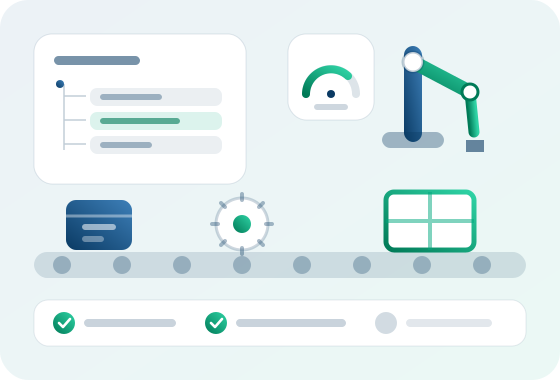
Production is where an ERP either proves itself or quietly gets bypassed. We configure Odoo so the shop floor can actually use it — and so finance finally gets a true cost per job.
Plans live in spreadsheets, material issues are recorded late, scrap and rework are invisible, and nobody can state the real cost of a finished batch until long after it shipped.
Multi-level BOMs with routings and work centres, barcode-driven material issue and receipt, lot and serial traceability, and analytic costing that rolls machine, labour and material into one number per order.
Specialisations inside manufacturing
Food production
Recipes and yields rather than fixed BOMs, batch numbers that must survive an audit, shelf-life and expiry control, and full forward and backward traceability for recalls.
Automotive spare parts
Huge catalogues with OEM and aftermarket part numbers, vehicle compatibility, cross-references and substitutes — plus stock rules that distinguish fast movers from dead stock.
uPVC windows & doors
Every order is made to measure. Quotation by opening size, automatic cutting lists and profile optimisation, hardware sets driven by rules, and survey-to-installation tracking on site.
Trading Companies
Importers, distributors and wholesalers live or die on stock accuracy and margin discipline. Both are configuration problems before they are management problems.
System stock disagrees with the warehouse, pricing depends on who is quoting, freight and duty never reach the product cost, and margin is only visible at year end.
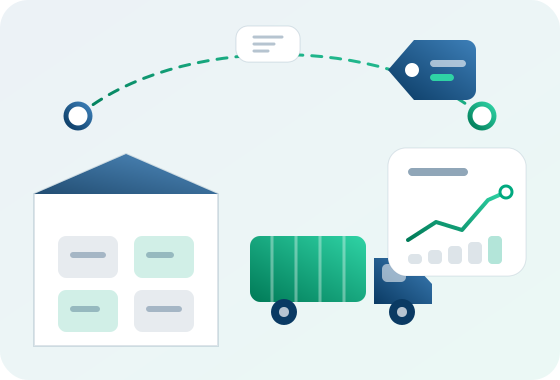
Perpetual inventory valuation, customer and quantity pricelists with approval limits, landed-cost allocation on every import, and margin reporting per order line, customer and product family.
HR Supply & Manpower Companies
When your product is people, your ERP has to track every one of them — from first application through deployment, timesheets, payroll and the client invoice that pays for it all.
Hundreds of deployed staff maintained in spreadsheets, visa and document expiries missed until they become fines, and payroll calculated separately from what is billed to the client.
One employee master carrying contracts, documents and expiry alerts; deployment records per client site; attendance and timesheets feeding both payroll and client billing from the same source.
Facilities Management
FM contracts are won on price and kept on evidence. The system has to schedule the planned work, capture the reactive work, and prove the SLA was met.
Job requests arriving by phone and WhatsApp, PPM schedules kept in a separate calendar, technician utilisation unknown, and SLA breaches discovered only when the client escalates.
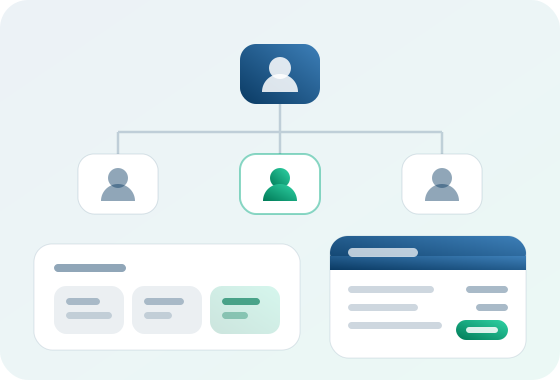
Contracts that generate their own PPM calendar, one intake queue for reactive jobs, mobile job cards with parts and customer sign-off, and SLA dashboards per building and per contract.

The method travels further than the sector
Construction, retail, logistics, professional services — the specifics differ, the approach does not. We map your process, find where the current system leaks time and money, and build from there.